SUHEYLA TAKESH / THE ARCHIVE AS REAL-TIME UPSURGE
Sharjah, originally made in 2020,
reviewed in 2025
Suheyla Takesh is the Director of the Barjeel Art Foundation, where she leads initiatives to expand the visibility and critical engagement with modern and contemporary Arab art through exhibitions, research and publication projects. Since joining the Barjeel Art Foundation in 2013, Suheyla has curated numerous exhibitions, and contributed essays to exhibition catalogues and journals. She holds a master’s degree from the History, Theory, and Criticism of Architecture and Art program at MIT.
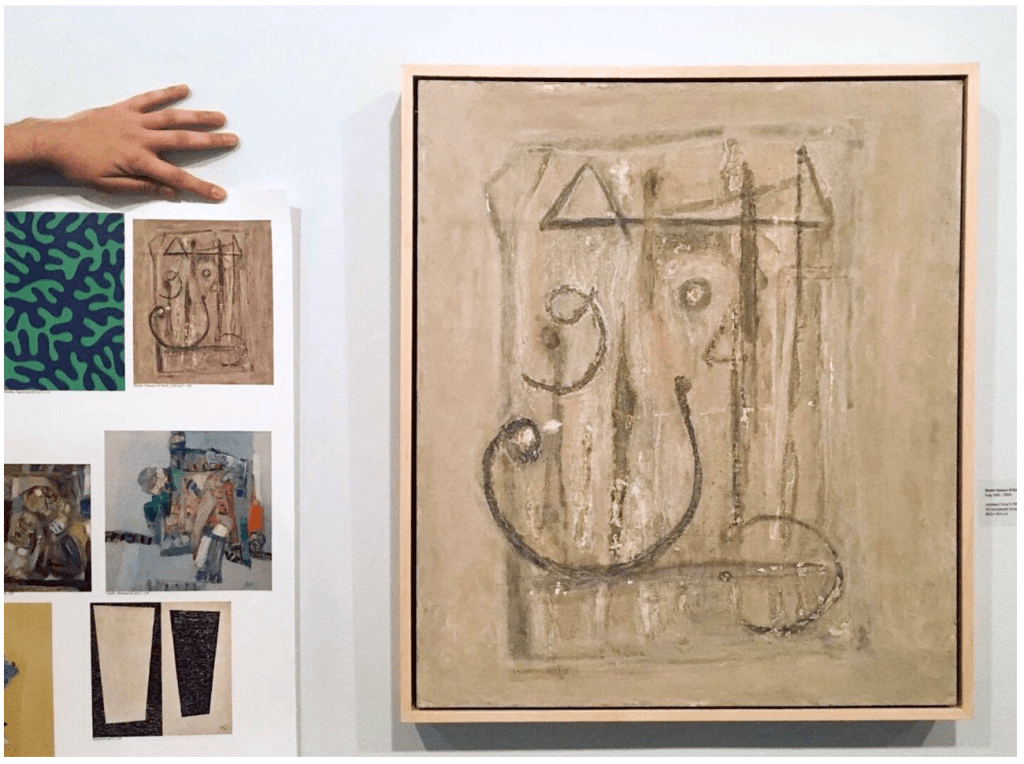
Image courtesy of Barjeel Art Foundation, Sharjah.
SUHEYLA, LET’S START FROM YOUR OWN DEFINITION OF AN ARCHIVE.
An archive is a depository of data, and to me that can be anything from WhatsApp conversations to images shared on Facebook, to physical notebooks, or file cabinets in an office. In a reality where we exist on multiple planes and live in several formats simultaneously (physical and virtual, in real-time and in video/audio recordings), archives are often created instantaneously, and hold significantly more of our thoughts and actions than we would deliberately care to document. This changes not only what we deem significant or “worthy” of archiving, but how we read and think about documents. Records are no longer created and stored merely for future reference, but are open for perusal, modification, fragmentation, and exchange in real time—and in that sense, an operational archive is often a network of ever expanding and contracting depositories that exist in different formats, located along different platforms on and offline, and are accessed and used in confluence with one another.
WHAT’S THE ROLE OF ARCHIVES IN THE GULF REGION? HOW ARE THEY CONSIDERED, AND WHAT FOR?
Archival material has been pivotal to a number of incredibly interesting projects by contemporary artists in the region, like Ala Younis, Akram Zaatari, Walid Raad, Lamia Joreige, and have formed the basis of exhibitions like Past Disquiet—a project by Kristine Khouri and Rasha Salti that excavates the history of and around The International Art Exhibition for Palestine (Beirut, 1978). I think archives can help to contextualize objects and provide an expanded frame of reference for researchers. They are spaces where one may find missing pieces of history, memory, thought and imagination. They can also serve as critical sites of inquiry and reflection. Most formalized archives, however, are themselves curated and designed, making one question what has been included or left out, what are the categories along which records are classified, who is allowed access, who has provided funding, and so on. The United Arab Emirates, where I am currently based, has seen an upsurge in the building of institutional archives in the past decade, including the Arabian Gulf Digital Archive (AGDA), which is an extension of the UAE’s National Archives launched online in 2019; the Arabic Collections Online (ACO), which is an archive of Arabic written heritage sponsored by NYU Abu Dhabi and launched in 2014; and the Sharjah Documentation and Archive Authority (SDAA) established in 2010. Several others are also in the making, like al Mawrid: Arab Center for the Study of Art at NYU Abu Dhabi headed by Professor Salwa Mikdadi. There is a recognition of the urgency in documenting the region’s history—particularly its twentieth-century history—and its inclusion in the conversation on global modernity. Due to the political and environmental instability in the wider region, many archives—both personal and institutional—are also being destroyed, looted, or misplaced. Many remain inaccessible or unorganized, and histories often have to be pieced together from fragmented sources.
ABOUT CURATORIAL ARCHIVES…
I wonder what constitutes a curatorial archive. Is it a collection of notebooks and journals? Emails? Reading lists? Is it a log of ideas that went into (or did not make it to) past exhibitions? Or perhaps it is an organized set of select material—designed, filtered, and packaged by the curator themselves? I think the idea of a curatorial archive can take on multiple forms and carry different meanings. They are personal to each individual, so the things one learns from them can vary greatly as well. Some archives may uncover particular methodologies, strategies or organizational logic. They may even contain anecdotes that reveal otherwise unseen details about a context or time. However, other curators may take garbled notes and jot down ideas haphazardly as they work, creating logs that may appear arbitrary and chaotic to an outside viewer. In researching (or curating) curatorial archives, I think one needs to be discerning and selective about their case studies. Not every practice—even of brilliant curators—leaves behind a lucid trail of relevant material that can be effectively analyzed and/or studied.
INDEED. AND MANY BRILLIANT CURATORS DID NOT EVEN LEAVE RELEVANT MATERIAL – A RELEVANT PRACTICE NOT ALWAYS COINCIDES WITH A RELEVANT ARCHIVE.
I think the truth is that many curators work in a manner that does not anticipate a retrospective study or a deliberate unfolding of their backstage work. So many practice in a mode that makes sense to them but is not necessarily intelligible to others. Not all, for example, keep an organized track of the literature they read, or save the notes they make on their phones, or file the memes they may exchange with colleagues, artists and peers. All these things—however ephemeral—are arguably important components of the curating process, and I think would merit a place in a so-to-speak “comprehensive” archive if such were to be compiled. Also, the work of a curator is already in many ways linked to organizational tactics: i.e. knitting ideas together into a concept, objects into an ensemble, texts into a catalogue, events into a community program, etc. So in practice, taking the further step to organize their set of organizational processes and approaches into an orderly format may often not be of immediate concern. I think to successfully dig into and unfurl what one may consider a curatorial archive (i.e. a charcuterie board of various materials, formats, and oddities that may be left behind by a curator), one needs to make provisions for the time in which they were practicing, and especially for the technologies inherent to that time. What tools were used to do research, to transfer data, to record voice, to organize text? What channels were used to communicate, to share images, to conduct conference calls? All these can become indicative of the significance and import of particular pieces of information that one may encounter in an archive.
WHAT’S THE FUTURE OF CURATORIAL ARCHIVES, IN YOUR OPINION?
Documents and ephemera left behind by a curator may provide a more intimate and nuanced view into how exhibitions are made than an institution’s documentation of the same. As such, I think they have the potential to become teaching tools in the future, feeding into the discourse on curatorial strategies, methodologies, mechanisms, and perhaps even the ethics of exhibition-making. Archives, or parts of archives, are also being increasingly commodified as objects for sale and display. In view of that, I think one needs to remain mindful that the purpose of archiving one’s own practice is to offer a look into the development and production of exhibitions, research projects, studio visits and other aspects of the profession, rather than to document the self.
CAN YOU TELL ME ABOUT THE ARCHIVE OF BARJEEL ART FOUNDATION?
The Barjeel Art Foundation uses several platforms to log and keep records of its activities, ranging from online hosting services like Dropbox and Google Drive, to portable hard disks and custom-designed software. Most of these archives are created for internal use. The Foundation’s team is (and has been, since its inception in 2009) very small—never exceeding 8 full-time members, that is including its founder. As a result, modes of working, and consequently of archiving, are idiosyncratic and often devised by individuals as and when they work on projects. Things that might be documented—apart from the obvious filing of accounts, contracts, and details of the foundation’s art collection—are to-do lists, process work and essay drafts, multiple iterations of exhibition layouts, photographs from visits and events, images of artworks that we were offered but did not acquire, PDFs of important emails, scans of hand-written letters from artists, and miscellaneous bits of data that we think might come in handy at some point.
HOW DO YOU USE THIS ARCHIVE AND WHAT FOR?
One of the main functions of the internal archive is to make information accessible to all members of the team, keeping everyone on the same page. This is why digital platforms are so helpful to us. The registrar may access the accounting logs for example; the curator may access the registrar’s condition reports, and so on. However, over the years Barjeel has also come to see its website as an open archive that the public can access. It is a space that holds our exhibition catalogues and other publications in downloadable PDF format, a log of our art loans, a record of all past and current exhibitions, a collection of media clippings, and most importantly, a constantly growing pool of images of the collection along with biographical texts on the artists. The aim is to make this material accessible to the general public, but also to scholars, curators, and students of modern and contemporary art. Having access to Barjeel Art Foundation’s documents and images online has on numerous occasions encouraged curators to request works for loan to institutions like the Museum of Contemporary Art Antwerp (MHKA), The Aga Khan Museum in Toronto, Haus Der Kunst in Berlin, and others. So in that sense, the open archive becomes a tool for curatorial research and exhibition development. It has also encouraged scholars and graduate students to get in touch with further questions on the provenance of works, information on artist estates, reading lists, or images of artist signatures or the backs of paintings—which might not be readily available on the website, but which the foundation often holds on file. The future of the archive (especially the Foundation’s internal archive) is still to be determined, but the team has already begun conversations on ways to assemble and frame select parts of it for public perusal.
GOOD LUCK WITH IT!

