PING LIN / THE ARCHIVE AS VESSEL
for TFAM (Taipei Fine Arts Museum)
Taipei, originally made in 2020,
reviewed in 2025
Ping Lin is the Executive Director of the Taiwan Fine Arts Foundation and former Director of the Taipei Fine Arts Museum. She was a professor at Tunghai University’s Department of Fine Arts until her retirement in 2022, having earlier served as department head and director of the university art gallery. With a background spanning art management, curatorial practice, art education, and artistic creation, she has served on the collection committees of major Taiwanese museums, as well as public art committees under the Ministry of Culture and Ministry of Transportation. Lin was formerly Art Director of Stock 20 Taichung and a member of the CCA Railway Arts Network, and she continues to contribute as a juror and advisor for major cultural awards and organizations.
MS. PING LIN, WHAT IS AN ARCHIVE TO YOU?
An archive is a vessel—a carrier of knowledge, memory, and culture. Archives come in various forms and contain diverse contents. They are not mere storage spaces; rather, they develop alongside society and culture, reflecting their complexity and diversity. For me, an archive is a conceptual method to organize content. It might be a collection of documents, a series of information, or even, more radically, an event itself.
HOW DO YOU UNDERSTAND THE ROLE OF ARCHIVES IN CONTEMPORARY SOCIETY?
In today’s society, art and research institutions bear the responsibility to compile and organize diverse archives through collection, acquisition, research, and curation, thereby inspiring creative and productive narratives. As guardians of memory, institutions transform archives into vessels of history. If history is constructed, archives are its building blocks. Those designing archival systems must recognize diversity and adopt creative strategies to collect materials that reflect multiple perspectives. In Taiwan, the complexity of colonial history and the post-colonial transitional justice movement make archival work urgent. To preserve a wide range of viewpoints on history, archival efforts must be persistent and diligent. Every historical event acts like a sieve, sifting history through different perspectives. Archival materials—documents, items—carry critical messages essential for historical studies. The process of building archives reveals that historical contexts are often more complex than expected. These preserved archives enable future generations to re-examine history with greater nuance. For example, Taiwan’s “White Terror” period under martial law left a blank in history. Decades after martial law’s lifting, previously restricted documents are becoming available, allowing artists and researchers to revisit and reflect on this era. This demonstrates how archives nurture diversity within local culture and art.
IN REGARD TO THAT, WHAT CAN WE LEARN FROM CURATORIAL ARCHIVES?
Curatorial archives are dynamic; they record the construction and deconstruction of power structures and the evolution of exhibitions. Studying these archives can inspire new curatorial approaches, shift perspectives, and cultivate culture in response to societal development.
WHAT IS YOUR RESPONSIBILITY IN THIS REGARD?
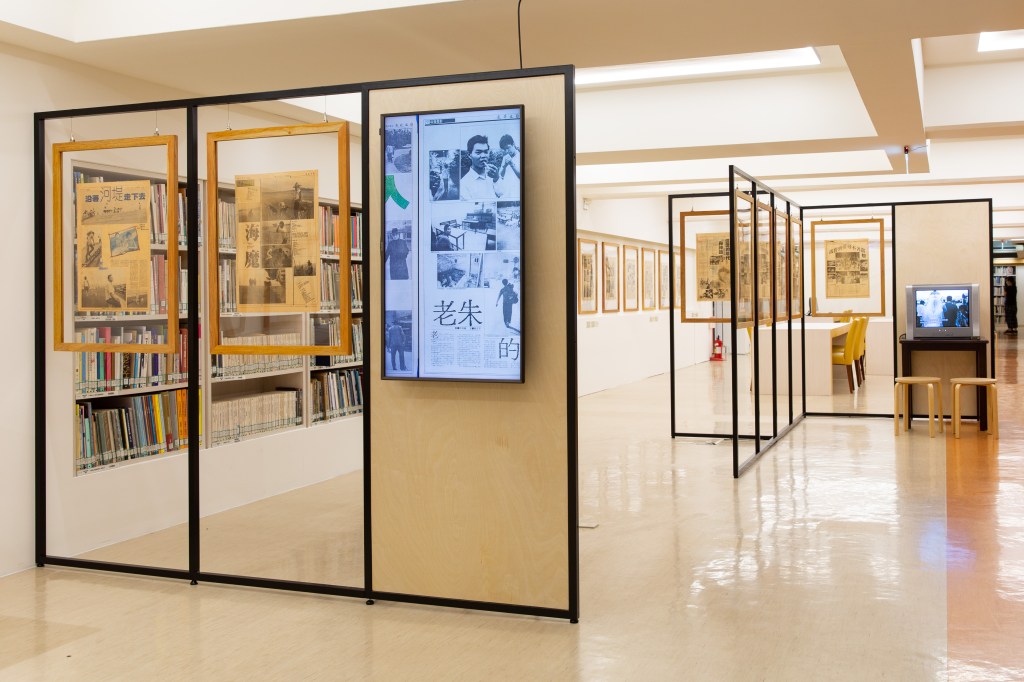
Leaders of institutions must actively invigorate archives and foster shared consensus between predecessors and successors to ensure long-term functionality. At TFAM, we build our archives through continuous accumulation, compilation, and organization, adopting flexible and organic strategies. We share archives via academic activities, archival curation, and an online inquiry system. Our online platform provides public access to artworks and library resources. Moreover, we are establishing a physical display area in TFAM’s archive center for small-scale curations to actively engage the public beyond passive online searches. Archives gain meaning only through sharing. They must be reviewed, reinterpreted, and reproduced to remain relevant to contemporary society. Since its planning in 2011 and official establishment in 2017, TFAM’s archive center has supported academic research and compiled museum documents related to modern and contemporary art. The center integrates the museum’s curations, research, publications, and educational projects, preserving institutional history and serving as a foundation for future curatorial work. It also collects archival materials on influential Taiwanese modern and contemporary artists, documenting their contributions to local art.
HOW DO YOU USE THIS ARCHIVE?
We share archives mainly through academic publications and curated exhibitions. For instance, the 2017 symposium Archival Turn brought international scholars together to discuss archives’ roles worldwide, with proceedings published in print and online. Exhibitions like For a Modern Vision: Taiwan’s Transdisciplinary Plasticity in the 70s (2017) and Declaration / Documentation: Taipei Biennial, 1996–2014 (2016) utilized archives to highlight artists’ impacts and historical contexts. We also pursue experimental curation combining museum collections and archives. The Herstory of Abstraction in East Asia (2019) incorporated loaned artworks and archival documents, enriching curatorial narratives. Archives are vital to collection management as well. Some contemporary works, such as Yayoi Kusama’s Dots Obsession (1998), are collected in archival form due to size and material fragility. As of July 2020, when this interview was conducted, TFAM held over 5,000 collection images available for research, publications, and promotional use. By that time, the museum had signed image-use agreements with 17 institutions worldwide to share these resources.
COULD YOU SHARE SOME SPECIAL EXAMPLES?
In summer 2020, three exhibitions exemplified archival interconnections:
- An Open Ending: Huang Hua-Cheng featured the late artist’s multidisciplinary works alongside rediscovered films and early student pieces, showcasing collaboration with external archives and academic institutions.
- Henri Cartier-Bresson: China, 1948–1949 / 1958 presented a comprehensive collection of original photographs and related archival materials, surpassing previous exhibitions in scale and contextual depth.
- The Secret South: from Cold War Perspective to Global South in Museum Collection connected TFAM’s holdings with archives from Singapore and Nusantara to explore Taiwan’s complex position within the Global South, fostering international archival collaboration.
These exhibitions highlight the diversity of archival systems and underscore the value of staying informed about external developments. Collaborative projects, such as with the Asian Culture Center (ACC) in Gwangju, Korea, have deepened cross-cultural connections through archives.
INDEED. WHAT IS THE FUTURE OF THE MUSEUM’S ARCHIVE, BASED ON WHAT YOU CAN FORESEE?
I plan to initiate an object-oriented project that invites curators to interpret and activate the archives through their expertise. Our curators’ diverse backgrounds—including art history, museology, and philosophy—enhance cross-disciplinary engagement. Archives form the trunk of an institution, while their activation represents growing branches and rhizomes that extend outward. I am optimistic that TFAM’s archival system will continue to thrive and expand.

