RAQS MEDIA COLLECTIVE
ANARCHIVING THE ARCHIVE
New Delhi, originally made in 2020,
reviewed in 2025
Raqs Media Collective was formed in 1992 in Delhi by Jeebesh Bagchi, Monica Narula, and Shuddhabrata Sengupta. Known for their interdisciplinary approach, they work across installation, video, photography, print, text, and performance, exploring the intersections of time, history, and urban experience. Their practice is deeply rooted in critical inquiry, often engaging with archives, philosophical concepts, and socio-political contexts to create poetic and thought-provoking works. Over three decades, Raqs has exhibited globally at major museums, biennales, and public spaces, gaining recognition as leading voices in contemporary art. They co-founded Sarai, a research and media initiative, and often curate and write alongside their artistic practice. Their work challenges viewers to question power, knowledge, and narrative in a rapidly changing world. Raqs have shown at various international exhibitions including Documenta and the Venice, Istanbul, São Paolo, Sydney, Taipei and Liverpool Biennales. Significant solo exhibitions of the Raqs Media Collective include Still More World at the Mathaf Museum, Doha, Qatar (2019), Twilight Language at Manchester Art Gallery (2017-2018); Everything Else is Ordinary at K21 Museum for 21st Century Art, Dusseldorf (2018); If It’s Possible, It’s Possible, MUAC, Mexico City (2015) and Untimely Calendar at the National Gallery of Modern Art, Delhi (2014-2015).
Exhibitions curated by Raqs include Hungry for Time, (Gallery of the Academy of Fine Arts, Vienna, 2021-2-22), Afterglow (Yokohama Triennale, Yokohama, 2020), In The Open or in Stealth (MACBA, Barcelona, 2018-19); Why Not Ask Again (Shanghai Biennale 2016-17), INSERT2014 (New Delhi, 2014) and The Rest of Now & Scenarios (Manifesta 7, Bolzano, 2008).
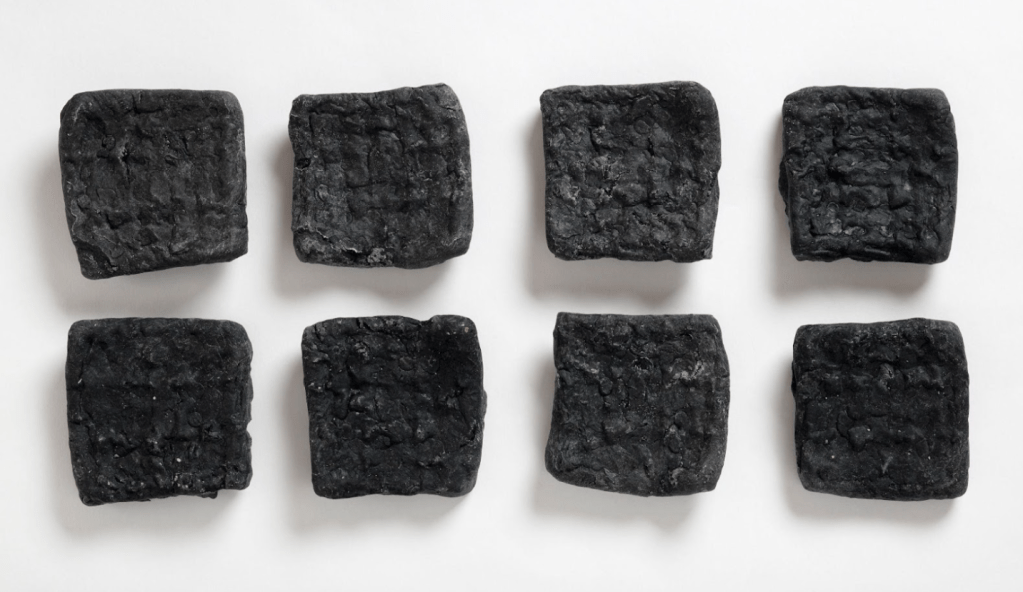
Courtesy Whitworth Art Gallery, photo by Michael Pollard
JEEBESH, MONICA AND SHUDDHABRATA: I AM CURIOUS TO KNOW YOUR STORIES ABOUT ARCHIVES, MAYBE IT COULD HELP SKETCHING WHAT AN ARCHIVES IS TO YOU…
When we approach a central repository where the state, or an institution that either mimics the state or lies in the shadow of the state, collects and classifies information, we become aware of how haunted these spaces are. This memory machine, incoherent in and of itself, degrading and dusty, is also the figure of abstraction at the heart of power. Any archive is haunted by its refusals and remembrances, its deletions and lesions, and by blisters and warts. While curating in an abandoned aluminum factory in Northern Italy, in the municipal archive of the town we heard a ghostly whisper in the documents of the prefect of the town. As we stared at the records of the confiscation of land for the factory from unwilling farmers, at the drawings of cadastral maps, at the camera angle of aerial reconnaissance photographs of the factory, and traces of the day on which some of its buildings were dynamited, a possessed voice gave us a cue how to confront the obstinate refusal of the residual to leave the balance sheet of history. It lingers on as unresolved marginal notes. An industrial arrangement does not just vanish into thin air, it hovers: un-dead and un-alive. However, there is also what we recognize as an Anarchive. This emerges from the living spectrum-memory of forms of anarchy. Anarchive is a dispersed seam of remembered or half-remembered events and biographies, faint trails and fallouts, not recalled from the perspective of states and statesmen, but of yet-to-form subjects, partial-subjects, quarter-citizens and those anytime to be declared aliens, as well as aliens. This ‘becoming’, actually ‘becoming disorderly’, is what we like to call the anarchive. In Pittsburgh, in an eccentric collection of objects to do with the history of the steel industry in this rust belt town, we found an awkward but affectionate sculpture of a ‘dog’ that a steel worker had made with odds and ends of machine parts while working in the factory. This ‘dog’ was both sentinel and transgressor of different orders of time. It was a reminder of an odd and passionate refusal to submit to the factory’s occupation of the worker’s bodily time. At the same time, it was a sentinel, a guard (guard-dog) of a worker’s memory of stealing time from work and turning it into an occasion for play. These things in sediments are like a geological stratigraphic profile of things that settle in the seams of events that disrupt temporal sequences. These make time feel volatile, and possibly occasionally volcanic1. In another instance, in the storage boxes of a museum of people’s history in the ex-industrial belt of England, we found ramshackle groupings of things that were not on display. Amongst them was a hard, dark black biscuit, baked for use by the communards of Paris in 1871. We had this unique and fragile object 3D scanned, then printed into a mould. This mould led to the making of fresh hard-tack biscuits, this time with charcoal, to make facsimiles of the original biscuit. Communards’ time could thus enter our digestive system. We propose it as nutrition for the coming era. The Anarchive is thus like a book of spells: for conjuring, for reading auguries, for casting intermissions, and sometimes, an aide to time-travel to odd places and at tangents to the ‘arrow of time’.
I WAS WONDERING WHAT YOU WOULD THINK THE PLACE OF ARCHIVES IN CONTEMPORARY SOCIETIES IS, ESPECIALLY IN SOUTHEAST ASIA.
Our societies perform delicate and crude manoeuvres of memory (what is remembered), false memories (what never happened), amnesia (what is forgotten), and what we like to call the amnesia of amnesia. This makes the entry and exit from memory-machines a perpetual dance, but with caution as the surface is slippery, ticklish, and teetering. Nevertheless, it has to be approached so as to examine how power looks, how it instructs life and how it views and re-views populations. Specifically for South Asia, historical materials are scattered in various cities such as London, Manchester, Edinburgh and Dublin. This dispersion anchors narratives and affects in complicated ways. It makes the writing of history a zone of privilege and a specialised domain, cutting it away from localised intellectual life and cultures of knowledge production and debates. The vacuum gets filled with narratives that rely (both by necessity and choice) on fictive archives anchoring phantasmagorical accounts of a hoary or a glorious past. Nothing is ever neutral in an archive. A handprint of a 19th Bengali peasant and road contractor in the archives of the London University, in the boxes of the collection of eugenicist and statistician Francis Galton, unraveled for us a long history of fingerprinting in the short 20th century. The original handprint taken in 1848 had been the basis of a discussion between anthropometrics and forensic experts that led to the invention of fingerprinting between Calcutta and London. This ink impression came to our life in 2007, at a time when the government of India had inaugurated the setting-up of the largest anthropometric database, including retina scans and fingerprint traces, which the world has ever known. The handprint beckoned us to see it move, to sense it to its count. Turning it into a larger than life-size counting device that could count, potentially to infinity, felt that the handprint waited for long years to emerge, to caution and to become untraceable. Sometimes, the future unsettles the past.
WHAT CAN WE LEARN FROM ARCHIVES RESULTING FROM A CURATORIAL ACTIVITY, IN YOUR OPINION?
In our engagement with how things are remembered, classified, forgotten and revisited, with how patterns are lost and found, resonances discerned and noted (which, is the tension between an archival and anarchival mode of work), we have come to recognise the following in our curatorial inclinations:
- It is possible to intervene in the infrastructure of how knowledge is produced in order to create detours and re-routing in the flow of knowledge in the world. This involves disturbing the arrangement of the hierarchies between who knows and who gets to be known, between minor and major, between experts and informants, between abstract concept and sensate experience, between logos and pathos. It requires the messing up or scrabbling of an archive, or expressing unfolding patterns in an anarchive
- That there is always a necessity to conduct gentle time-raids onto archival materials in order to prise open the temporal rhythms and post-scripts to the withholding narratives
- That the foregrounding of where you find your cues, and how you get there, and back – which is the matter of what we call ‘sources and itineraries’ can often be an anarchic move, and the bounty of time-raids. This can yield egalitarian moves: one can retrieve what was not art from an archive and translate it into art, thus smudge and rewrite the lines of art and non-art. For an exhibition at the MACBA in Barcelona (2018), we drew in the drawings of the nervous system made by the neuroscientist Santiago Ramon y Cajal in early 20th century into an exhibition exploring futurities. This was to re-draw the itinerary of an artefact to a route where it was never meant to go
WHAT DO CURATORIAL ARCHIVES NEED TO BE SUCCESSFULLY UNFOLDED?
Every labyrinth needs threads. Too many threads make for knots, and each bundle of knots needs new expertise. Curatorial archives could be seen as assemblies in fermentation, like in a pickle jar.
I LIKE THAT IMAGE! AND WHAT’S THEIR FUTURE?
We’d rather say that they have a luminous than a bright future. In other words, we hope that curatorial archives, or archives of curatorial thought and activity, are illuminated from within and not have a commemorative light shone on them from outside. We are aware, for instance, of how the late Okwui Enwezor’s papers and archives are to be hosted by Sharjah Art Foundation. In Sharjah, we believe, these will be more accessible to scholars, artists, writers, curators and researchers from the Global South. This is a very wise and foresightful step that Okwui took. He was thinking about his archive in the future dimension. We must always be alert to how and where the archive travels in time. Digitization, and open access to papers, will be important. The Asia Art Archive based in Hong Kong is systematically developing digital repositories based on scans of artists’ papers. This will ensure that legacies will have a dispersed and varied life. Archives, wherever they exist, should be open, should be inclined to become more like their shadow – like Anarchives.
IS THERE A DISTINCTION BETWEEN ARTISTIC AND CURATORIAL PROJECTS IN YOUR WORK? IF YES, IS IT REFLECTED IN THE NATURE OF THE ANARCHIVE YOU KEEP?
We don’t deal in distinctions. We live and delight in blurs. We keep returning to the memory of films seen together, some as far back as film school. One body of work that stays with us e.g. are the films of the Bengali filmmaker Ritwik Ghatak. We saw some of these films on a Steinbeck editing machine at the National Film Archive while undertaking an archival documentation project on the history of cinematography in India, more than two decades ago. A sequence in one of the films, ‘Subarnarekha’, featured aircraft abandoned in a desert. This made us look for a desert graveyard for airplanes. We ourselves reached one many years later in California, and the rusting airplanes in the desert found their way into a work that we made. Another film from the same body of work, Jukti Takko Aar Gappo (Reasons, Arguments and Stories), became a source for our curatorial thinking for the 11th Shanghai Biennale: Why Not Ask Again. It offered us an attitude, and a method, of persistent questioning. We treat materials as sources, we travel to them and from them. This informs both our artistic and our curatorial attitudes. Naturally, we have a growing body of notes, references, observations, scattered objects and documents that we pick up on our travels and during research, things that we read, annotate and pass between ourselves. There is an almost thirty-year history of doing this amongst the three of us. Nowadays, we tend to use WhatsApp as a collective annotating and commenting device for things we find intriguing. Like we said, this is not an archive: it is an anarchive. It makes no false claim to systematicity, even though it is open to being read for patterns. The interesting thing is that this daily procedure also works as a mode of deep memory – it sediments, and over a long period shapes the contours of our thinking and practice. So, something that may have attracted our attention and may have been filed away ten years ago as a curious thought, may resurface after a decade in connection with something completely different – leading to unusual serendipities and epiphanies. Having a triangulated memory, which is the engine of the Raqs Anarchive, is something we are very aware of by now.
HAVE YOU EVER SHOWN YOUR ARCHIVE IN AN EXHIBITION?
Archival materials, and Anarchival dispositions, have entered our practice in several works, and have been in exhibitions. Are these materials from our ‘archive’? Hard to say. But there’s a symbiotic relationship between how this unsystem grows and how our work process proceeds. Whether it is the handprint of the nineteenth century Bengal peasant that becomes a counter to infinity (UID {Unlikely Intimacy of Digits}, 2011), or the re-animation of photograph by Felice Beato during the war of 1857 in Northern India (Seen At Secundrabagh, 2011), or even the way in which administrative noting and decisions on land use in Delhi from the 1970s entered one of our earliest installations (The Co-Ordinates of Everyday Life, 2002) – these are all ways in which handling sedimented-time becomes a part of our working process. For instance, while working on a recent piece (The Blood of Stars {A scene in ten walks}, 2017) in a mountain cave that was also once a nuclear shelter for the Swedish Army, we came across many intriguing items: an amateur music video made in a small town in the far north of Sweden, forms for filling in information about casualties in the case of a nuclear attack, a Hindi poem on iron by the poet Arun Kamal. All these made their way into the work. They were not summoned from memory like slaves, but made their presence felt in conversation while we were thinking the work through. That is how ‘archiving’ or moves around it appear.
An even more recent piece (Not Yet at Ease, 2018) thinks through on the experience of soldiers from the South Asian subcontinent in the battlefields of the First World War. We were particularly interested in the psychological experiences of Indian soldiers during the war. To try and understand them we looked at medical reports in military archives. During the war, doctors themselves were somewhat stymied in trying to understand what was happening to the minds, and not just the bodies of the soldiers. We also read letters written by South Asian soldiers, the contents of which too suggested that something was going wrong with their minds. And we also read the reports of the military censors on these matters. A military censor wrote that the letters display a tendency towards an excess of poetry, which he saw as “an ominous sign of mental disquietude”. For us, that was a clue and a way into the material. While there was an awareness of psychological trauma, the authorities didn’t want to give it a name – they denied the diagnosis of shell-shock that was widespread amongst both Indian soldiers and British servicemen. It was a moment of listening to a pause, a silence in the archive. The work finally begins with an effort to understand this awkward silence.
Besides the letters, the medical notes, and official reports, we also extensively reworked and interpreted two archival photographs, both from the collection of the Imperial War Museum, as well as fragments of archival film from the period, and sound recordings of the voices of Indian soldiers made by a German linguist in a prisoner of war camp near Berlin. All of these are starting points for a linked set of artistic and imaginative gestures that render our sense of the moments of poise and lucidity that the soldiers, and followers, found in the middle of the war.
WHAT’S THE FUTURE DESTINATION OF RAQS’ ANARCHIVE? HOW DO YOU IMAGINE IT TO BE USED AND/OR ACTIVATED?
As long as the Raqs practice remains, our Anarchive will remain active. Living as we do now in the middle of a pandemic, in a lockdown, in a situation of increasing instability, our thoughts do occasionally turn towards mortality, and to what will happen ‘after’ the practice no longer exists in its current configuration. Someday, we hope later rather than sooner, this will happen. We have not yet given much thought to what plans we should make for that posthumous or quasi-posthumous reality. But we know we should not postpone that thinking and discussion indefinitely.
A SUIVRE…
- This meeting resulted in an image that Raqs Media Collective kindly allowed us to use as a logo of Curatorial Archives for Curatorial Practices, titled Anonymous Steel Worker, 2007. An object that archived ways to cheat against time seemed perfect to evoke archives of exhibitions. ↩︎
 CURATORIAL ARCHIVES IN CURATORIAL PRACTICES